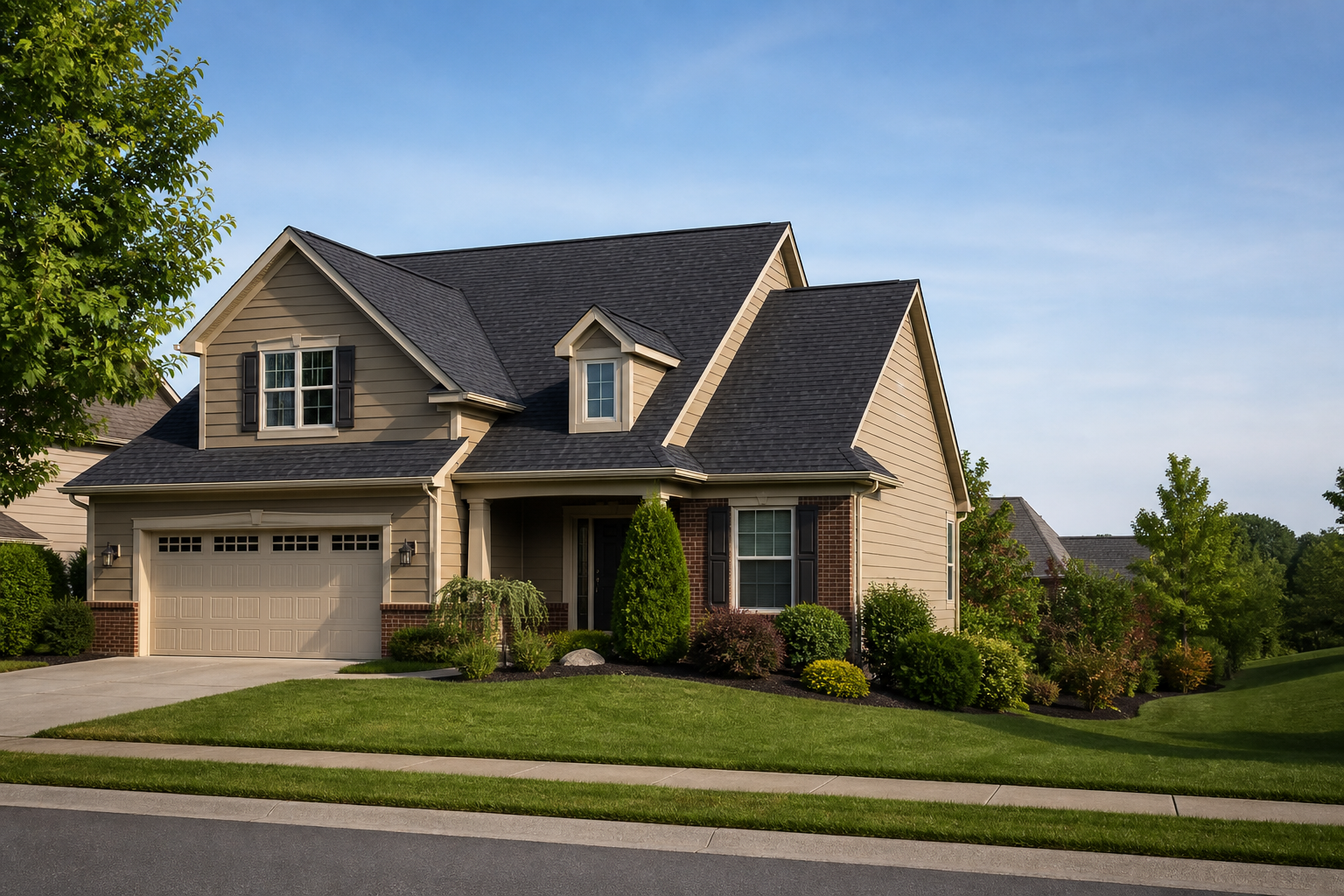
Materials and lifespan
Asphalt shingle near Mount Hope Bay tends to wear faster than the same product would inland, since salt air and open wind both shorten the practical life of the shingle and its fasteners. An architectural shingle nailed with a six-nail high-wind pattern and stainless fasteners is the standard recommendation for anything within a couple of miles of open water, and a lighter nailing schedule is fine further inland toward the Somerset and Dartmouth lines.
GAF architectural shingle is used on most replacements here because it holds up to the local wind rating requirements and because color and warranty registration through one manufacturer keeps the paperwork simple for the homeowner.
Permits and multi-layer roofs
Every South Coast town in the service area, Fall River included, requires a permit for a full roof replacement, and each has its own building department and inspection stage. That paperwork is filed and scheduled as part of the job rather than left for the homeowner to sort out.
State code allows at most two layers of shingle on a roof. Many Fall River triple-deckers already carry two, which means the next roof has to be a full tear-off regardless of what a quick estimate over the phone might suggest.
Storms, leaks and timing
An active leak gets a tarp the same day or the next, weather allowing, with the permanent repair scheduled once the deck has dried out enough to work on safely. Sealing new material over damp decking just traps the moisture and shortens the life of the repair.
Ice dams are treated as an attic and insulation problem first and a roof problem second, because heat cables and roof-level fixes alone tend to repeat the same damage the following winter.
Repair versus replacement
The general rule applied on nearly every inspection is a comparison of remaining roof life against the cost of the repair being considered. A roof with several years of life left and one isolated problem, like a single bad valley or a cracked pipe boot, almost always makes more sense to repair. A roof nearing the end of its service life with the same isolated problem is a different conversation, since the repair buys very little time relative to its cost.
That comparison is written into the inspection notes in plain terms, with the reasoning spelled out, rather than left as a verbal recommendation that is hard to weigh against another contractor's quote.